Leadership, training, and consultation for
school counselors and administrators
Transformed School Counseling for Improved Student Outcomes
Hatching Results® provides a wide variety of professional services designed to improve school counseling programs. Utilizing evidence-based practice models, Hatching Results brings leadership, training, and consultation to school counselors, administrators, and school district leaders seeking to improve their comprehensive school counseling programs. With the goal of improving efficiency and effectiveness, we use data to drive decision-making and evaluate the impact of programs and services to improve outcomes for all K-12 students.
Founded by Trish Hatch, Ph.D., Hatching Results provides comprehensive district training, conference keynotes, onsite and virtual professional learning, grant writing and evaluation, online courses, and regional cohort academies. Over the last 20 years, Dr. Hatch has successfully trained thousands of school counselors and administrators in hundreds of school districts from virtually every state in designing, implementing, evaluating, and improving school counseling programs. Let our team of expert trainers assist your school, district, or region in getting results!
WE’VE HATCHED!
Our district partners share our passion for results and it shows in the recognition they receive for their impact on student outcomes and excellence in school counseling. Learn more by reading featured stories of their successes.
Governor Newsom signed California's 2026-27 budget on June 29, unlocking $128 billion for schools—including a $5 billion flexible block grant districts can direct toward counseling and student support. Here's what's in it, and how to make the case for your program.
California's $4.1 billion Community Schools Partnership Program offers a once-in-a-generation opportunity to transform student support—but only if districts move beyond isolated programs to a coordinated strategy. Discover why school counselors are the essential "central nervous system" of integrated student supports, how the MTMDSS framework aligns counseling roles with CCSPP's four pillars, and the data-driven strategies needed to sustain these initiatives beyond the 2032 funding sunset.

Students don't experience school through a single role. They move through hallways, classrooms, offices, and conversations that involve school counselors, school social workers, college and career advisors, school psychologists, school-based therapists, administrators, and more. And when those professionals aren't aligned, students feel it.
California just proposed a record $127.1 billion in education funding for 2026–27 — including $5 billion in completely discretionary block grants and a 4.31% Super COLA. Here's what the May Revise means for school counseling, student support, and postsecondary readiness programs.
Funding Student Success highlights timely federal and California funding opportunities that can support school counseling, student support, and postsecondary readiness efforts. From Title programs and Perkins V to LCFF, Community Schools, CTE grants, and career pathway investments, this resource helps leaders identify where funding exists and how to align it with student-centered goals.
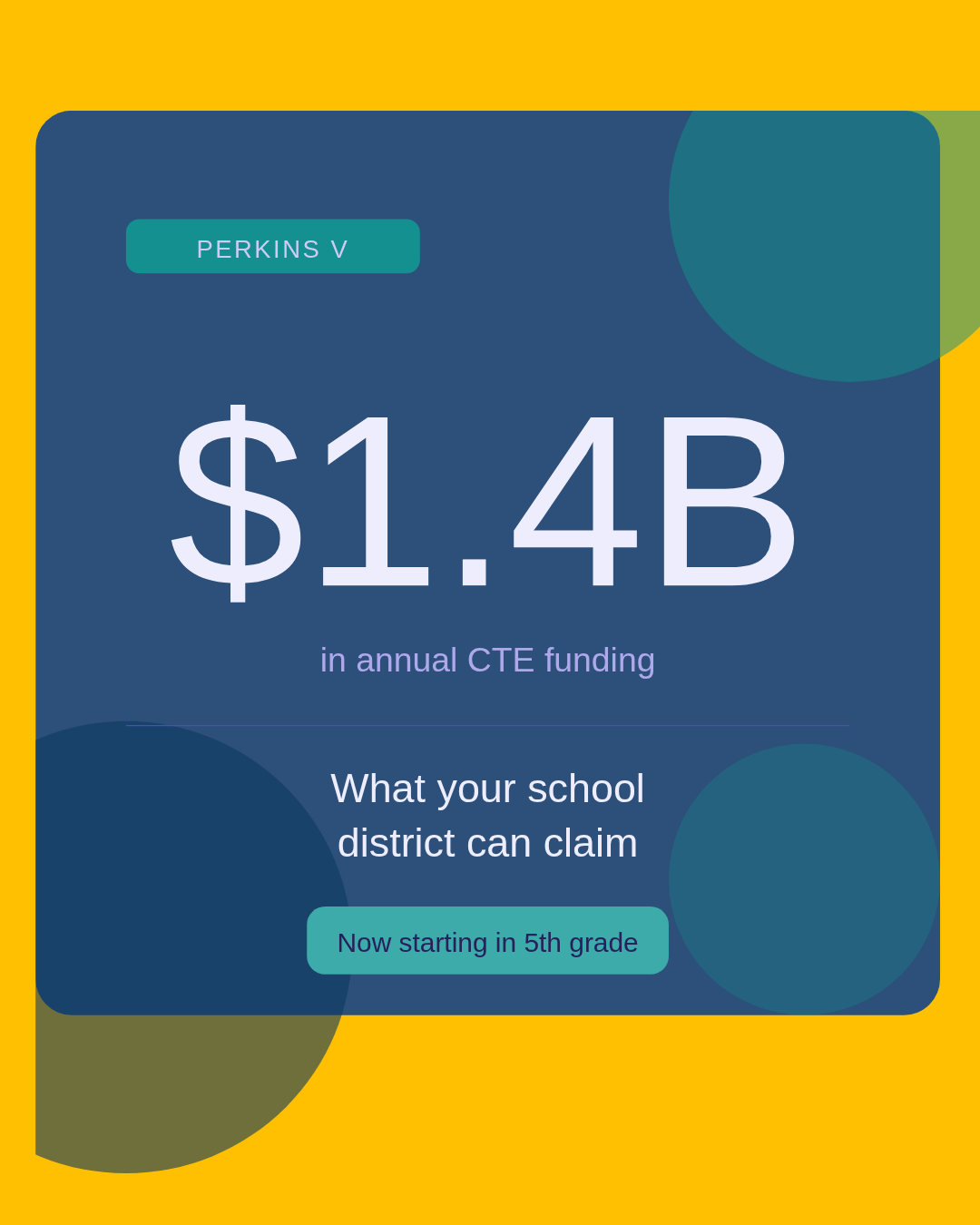
Did you know federal CTE funding can now reach students as early as 5th grade? Under Perkins V, that's exactly what's possible — a significant shift from the previous law, which generally didn't allow funding below 7th grade. Learn what this means for your state and how schools are using these funds to introduce career pathways earlier than ever.
California's students deserve mental health support that meets them where they are — and CYBHI is making that possible.
The Children and Youth Behavioral Health Initiative's statewide school-linked fee schedule is reshaping how school counselors deliver care. With zero out-of-pocket costs for families, coverage for students through age 26, and a permanent reimbursement pathway replacing the old grant-funding cliff — this isn't just a policy update. It's a structural shift that puts school counselors at the center of sustainable, equitable student wellness.

The result so far? 31,567 students served and $6.84 million in new revenue generated statewide.
Here's what every PPS credentialed counselor in California needs to know.
Federal funding exists to bring career exploration into your school — starting as early as 5th grade. Perkins V provides $1.4 billion annually to support CTE programs, counselor positions, and professional development. Is your district making the most of it?
The California Career Technical Education Incentive Grant (CTEIG), SACS Resource Code 6387, offers districts a valuable opportunity to strengthen Career Technical Education programs through funding that can support both school counselor positions and professional development. Allowable uses include career-focused counseling services, student support systems, and training for counselors, teachers, and administrators when directly tied to CTE pathways. With ongoing state investment and proposed automatic renewals beginning in 2026–27, CTEIG remains a key funding source for districts looking to expand college, career, and workforce readiness systems while sustaining high-quality student pathways.
Hatching Results was proud to contribute to the 2026 Evidence-Based School Counseling Conference, sharing sessions on equity-centered research, Tier 2 supports, policy implementation, and K-12 research partnerships. Explore highlights from this year’s conference and why now is the time to start planning for EBSCC 2027 in Charlotte.
California and federal agencies invest hundreds of millions of dollars each year into career pathways, dual enrollment, apprenticeships, and college access initiatives—yet many districts are not fully leveraging these opportunities.
This guide is designed to help school counseling leaders and district teams better understand the funding landscape and use it strategically to expand impact. From supporting additional counseling positions to strengthening college and career advising systems, these funds can play a critical role in building sustainable, student-centered programs.
Inside, you’ll find a breakdown of key funding streams, estimated award ranges, and practical considerations to help your district align resources, avoid common pitfalls, and maximize available opportunities.
👉 Explore how intentional planning can turn funding into meaningful outcomes for students.
One high school leadership team spent six hours together and left with a clear, data-driven plan to support incoming freshmen before problems surfaced. Here's how they did it and what your team could accomplish in a single focused day.